

Mechanism of Action
Acetaminophen is a unique drug—its mechanism is different from NSAIDs (like ibuprofen).
Here’s how it provides fast relief:
● Central Action: It primarily works in the brain and spinal cord (central nervous system)
rather than blocking pain at the site (like Ibuprofen does).
● Prostaglandin Blocker: Acetaminophen inhibits cyclooxygenase (COX) enzymes,
especially a brain-specific variant, reducing the production of prostaglandins—the chemicals that signal pain and fever.
● Antipyretic Effect: It works in the hypothalamus (the body’s thermostat) to lower fever.
● NO Anti-inflammatory Action: Unlike NSAIDs, acetaminophen does not reduce swelling at injury sites.
How Fast Does It Work?
● Onset: 30–60 minutes.
● Duration: 4–6 hours per dose for immediate-release tablets.

Key Takeaways
● Acetaminophen = Rapid Onset: Most people notice pain or fever relief within an hour.
● No Irritation of Stomach: Safe for people with ulcers or chronic heartburn, as it does not thin the stomach lining like NSAIDs.
● No Impact on Clotting: Does not thin your blood.
● No GI Bleeding Risk: Preferred for those at higher risk of stomach or gut ulcers or who cannot tolerate NSAIDs.
In Summary:
If you need pain or fever relief fast—and can’t risk stomach trouble or interact with blood thinners—acetaminophen is nearly always the preferred option when used correctly.
Acetaminophen vs. Ibuprofen: Which Is Better for You?
Acetaminophen and ibuprofen are among the most common choices for pain and fever relief in the U.S. But they work differently and suit different needs.
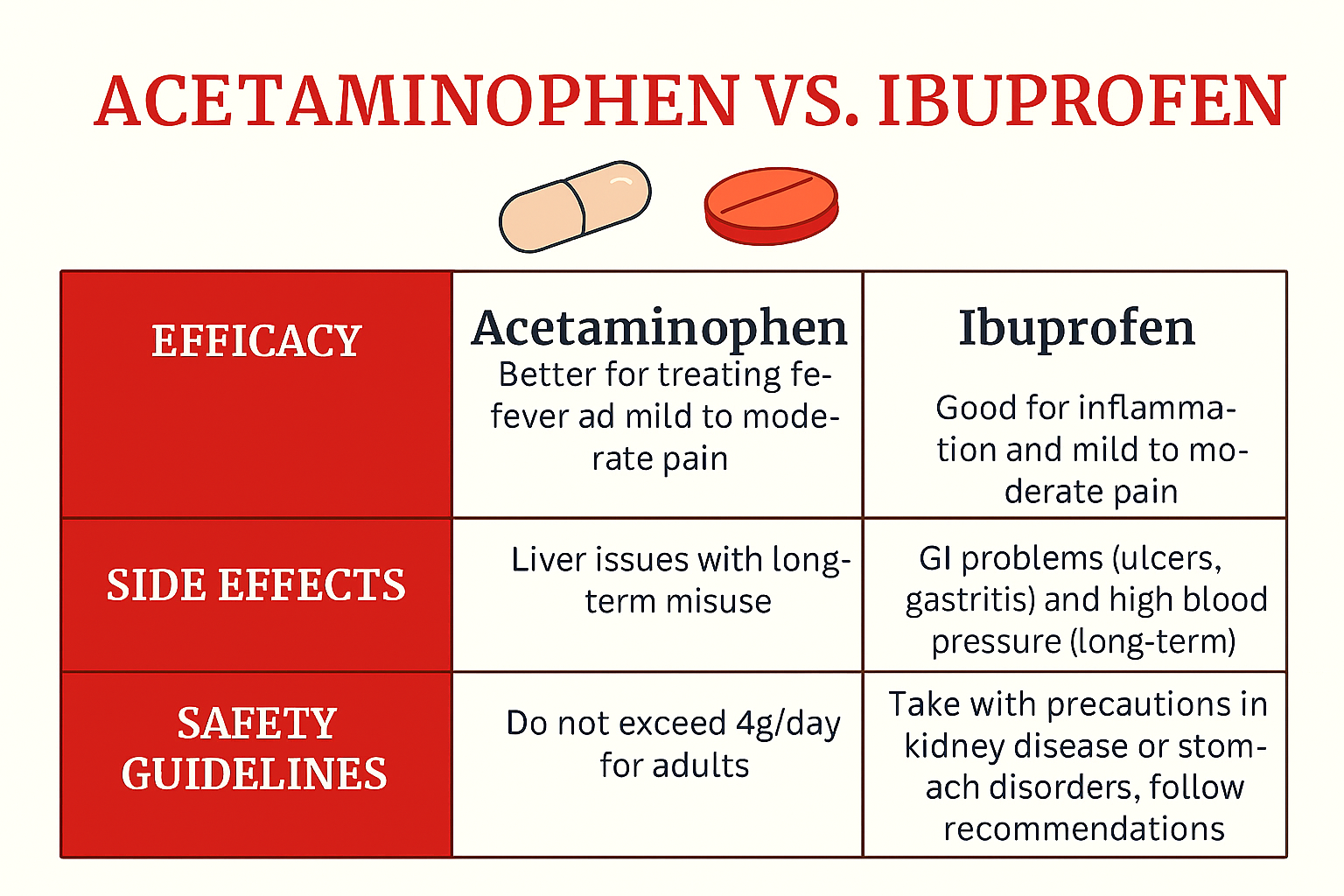
When to Choose Each Option
● Acetaminophen is best for:
○ Headaches, migraines
○ Non-inflammatory pain (osteoarthritis, general aches)
○ Fevers (safest overall for kids/teens, seniors, people with ulcers or on blood
thinners)
○ Toothaches or minor dental pain while you wait for a dentist
○ Sore throats, cold/flu discomfort.
● Ibuprofen is often better for:
○ Sprains, strains, or injuries with swelling/inflammation
○ Menstrual cramps
○ Back pain due to muscle spasm
○ Inflammatory arthritis
○ Dental procedures (when inflammation is present)
Important:
● Never double-dose these drugs; each has its own risk profile.
● Acetaminophen is NOT an anti-inflammatory, so won’t help where swelling is a primary symptom.
Combination Therapy
Newer products now combine acetaminophen and ibuprofen for severe pain—studies show this
combo can work better than either alone for things like dental or surgery pain. Only use under guidance and follow all stated dose limits.
Who Should Use Acetaminophen? (Answered Directly)
What is acetaminophen used for?
It is used for headaches, fevers, toothaches, minor back pain, arthritis pain, muscle aches, and general aches due to colds, flu, or vaccination reactions.
Are acetaminophen and paracetamol the same?
Yes—acetaminophen (U.S.) and paracetamol(UK/World)are chemically identical and interchangeable.
Is acetaminophen stronger than ibuprofen?
Ibuprofen is generally better for pain caused by inflammation. For fever and general aches, acetaminophen works just as well and is gentler on the stomach.
What is acetaminophen called in the UK?
It is known as paracetamol. Look for Panadol or Calpol for kids in the UK.
Why isn’t acetaminophen called paracetamol in the U.S.?
The name “acetaminophen” was created from its chemical structure by U.S. drug authorities, while the rest of the world adopted “paracetamol” from a slightly different abbreviation of its
formula.
Tylenol Brand History and Global Impact
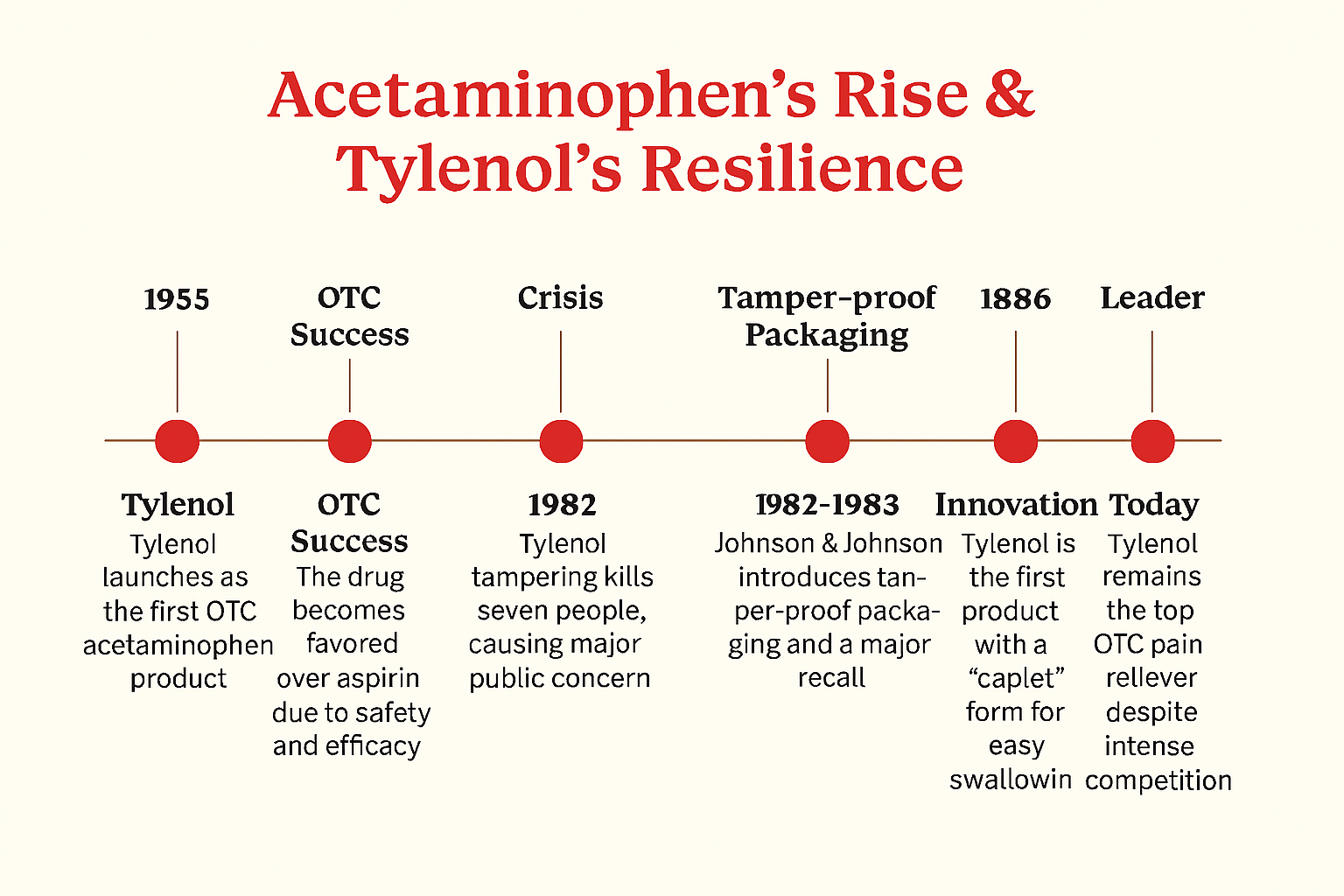
A Timeline of Tylenol: From Discovery to Market Leader
● 1878–1893: First synthesized and recognized as a pain reducer (paracetamol.
● 1947–1948: Scientists identified paracetamol as a safe metabolite of earlier analgesics.
● 1955: Tylenol introduced in the U.S. for feverish children, marketed as gentler than aspirin. “Acetaminophen” was coined as the new generic name.
● 1960s–1980s: Becomes an over-the-counter staple in the U.S., with children’s and adult versions. Other countries sell it as “Panadol,” “Calpol” or “Paracetamol.”
● 1982: The Tylenol crisis—tampering deaths lead to the recall of 31 million bottles.Johnson & Johnson sets a safety precedent with tamper-evident packaging, restoring consumer trust.
● Beyond 1980s: Tylenol regains market share and inspires global packaging reforms, remaining one of the most trusted brands.
The Different Forms and Brands of Acetaminophen
Common U.S. Brands and Formulations
● Tylenol (most common)
○ Regular Strength (325mg)
○ Extra Strength (500mg)
○ Extended Release (650mg, for arthritis)
● Other U.S. brands: Mapap, Actamin, Anacin Aspirin-Free, Pain-Eze, Q-Pap, Silapap, Tempra Quicklets, Feverall (suppositories)
● Combination brands: NyQuil, DayQuil, Percocet, etc. (always check label for “acetaminophen” or APAP)
International & UK Brands
● Panadol (adult/paracetamol, Australia, UK, many countries)
● Calpol (children’s syrup, UK/Ireland)
● Alvedon, Disprol, Hedex, Medinol, etc.
● Paracetamol generics (UK supermarket and pharmacy brands)
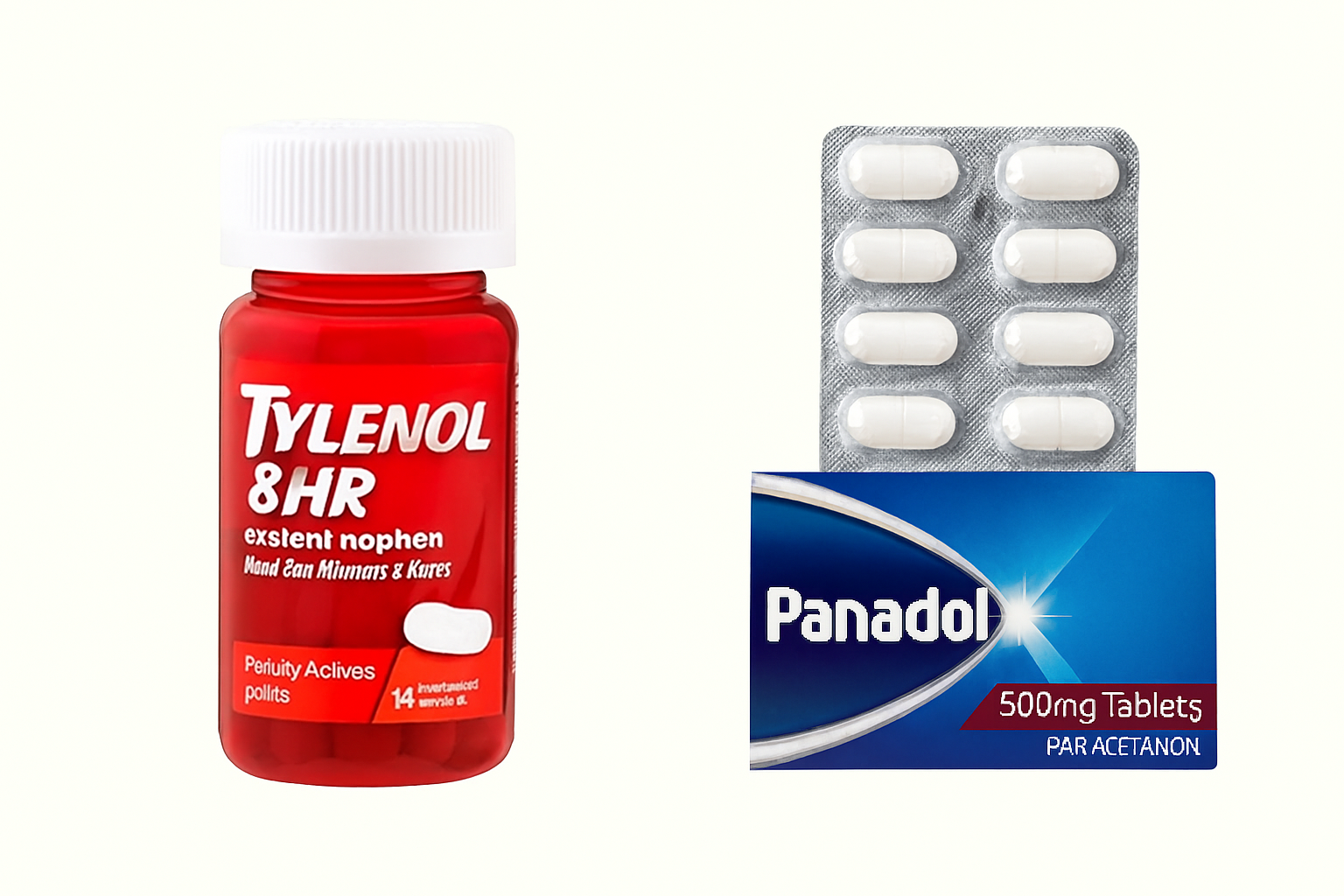
Dosage Forms:
● Oral tablets/capsules (325mg, 500mg, 650mg)
● Rapid-release gelcaps, liquids, chewables, oral powders
● Suppositories (children/adults who can’t take pills)
● Combination products with cough/cold meds, sleep aids, opioids, and antihistamines.
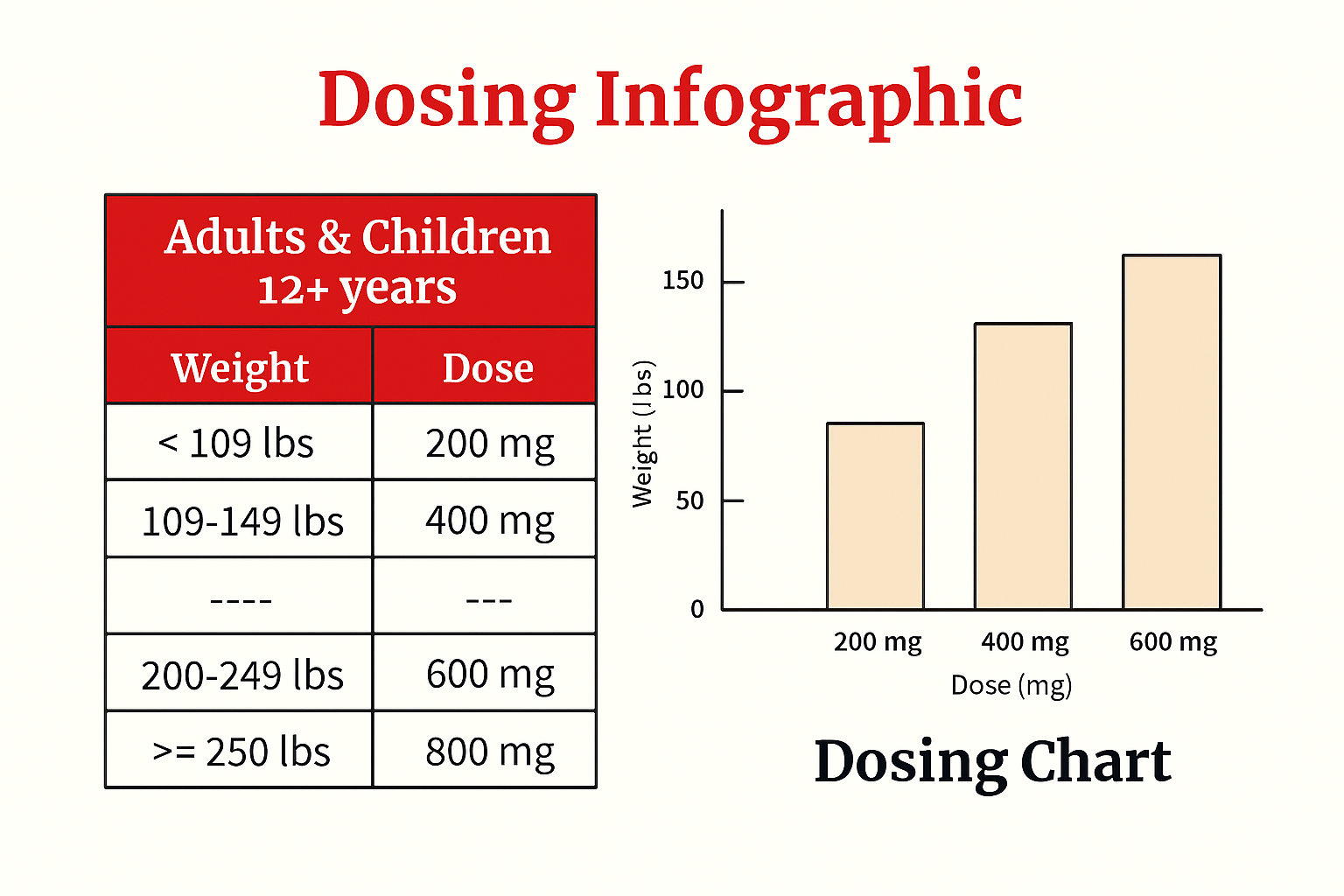
Acetaminophen Dosage Guidelines and Use—Stay Safe.
Typical Adult Doses:
● Regular strength: 325–650mg every 4–6 hours as needed
● Extra Strength: 500–1000mg every 4–6 hours; max 3000mg–4000mg daily
● Extended Release: 650–1300mg every 8 hours (max 3900mg/day)
● Max for all adults: 4000mg (4g) in 24 hours (but many experts now recommend 3000mg for extra caution)
Children’s Dosing:
Always based on weight and age; check product instructions and use only designated pediatric
formulations and measuring devices.
Important Safety Rules:
● Only take as directed on the label or by your provider.
● Do not “double up” on more than one acetaminophen-containing product.
● Avoid alcohol: It increases liver risk.
● Seek medical attention if you suspect you’ve gone over the daily dose, even if you feel fine—liver injury can progress silently.
Safety Profile, Side Effects, and Special Precautions
When Used as Directed (4000mg/day or less):
● Usually very well tolerated
● Main risks: Liver damage if exceeded or combined with significant alcohol
● Rare but serious: Skin reactions (Stevens-Johnson syndrome), allergic reactions Common Mild Side Effects:
● Nausea, vomiting, headache, constipation (generally rare)
Serious Side Effects / Overdose Signs:
● Upper right stomach pain
● Yellowing of skin or eyes (jaundice)
● Loss of appetite
● Severe fatigue
● Dark urine, clay-colored stools
● Skin rash, hives, blisters
Rare Risks:
● Severe skin reactions (Stevens-Johnson Syndrome)
● Anaphylaxis (emergency)
● Confusion, swelling, unexplained bleeding.
Who Should Use with Caution/Avoid:
● People with pre-existing liver disease or heavy alcohol use (may need lower maximum dose)
● People allergic to acetaminophen (rare)
● Patients on medications that affect liver enzymes (e.g., some seizure drugs)
● Pregnant/breastfeeding women: generally considered safest OTC choice but see next section for prenatal concerns.
Special Considerations: Pregnancy, Harvard Study, and Prenatal Concerns
A major U.S. research effort led by Harvard and the Icahn School of Medicine, published August 2025, analyzed 46 worldwide studies on acetaminophen use in pregnancy and risk of autism/ADHD in children.
Key Findings:
● Prolonged or repeated use in pregnancy (especially 4+ weeks) is associated with modestly increased risk of neurodevelopmental disorders like ADHD or autism.
● The FDA and Harvard experts now advise: Use only for the most necessary situations, at the lowest effective dose and shortest possible duration, and consult with your OB
provider.
● Tylenol (acetaminophen) still remains the preferred choice for pain or fever in pregnancy, as NSAIDs are generally not recommended in the third trimester due to risks.
Takeaway for Pregnant Readers:
● Do not avoid treating serious pain or fever—these also pose risks to the developing fetus.
● Aim for the “lowest effective dose, shortest duration,” and always keep your healthcare provider informed.
Answers to Your Most Common “Acetaminophen” Questions
Q: Is acetaminophen safe for everyday use?
A: For most people—yes, when used as directed. It’s preferred for those who have stomach sensitivity, are on blood thinners, or require regular mild pain control. Never exceed 4g/day, and chronic daily use should be reviewed by your provider.
Q: Can I take Tylenol and ibuprofen together?
A: It’s generally safe (when both are used in normal doses and not at the same time) for acute severe pain, like dental pain. Space their doses several hours apart. Taking both at once for
days is discouraged unless directed by a provider.
Q: How is Tylenol different from paracetamol or Panadol?
A: No difference except in name and branding—Tylenol (U.S.), Panadol (UK, Australia), and paracetamol are all acetaminophen.
Q: What’s the risk if I accidentally take too much?
A: Overdose can cause silent, irreversible liver injury—symptoms (nausea, confusion, jaundice,
abdominal pain) may not appear for hours. When in doubt, call poison control (1-800-222-1222) or seek emergency help.
Q: How do I know if a medicine has acetaminophen?
A: Look for “acetaminophen” or “APAP” in the ingredients list—especially in cold, flu, sleep, migraine, or prescription pain combination remedies.
Bullet Takeaways for Safe, Effective Acetaminophen Use
● Always check labels—look for “acetaminophen” or “paracetamol.”
● Never exceed 4,000mg/day for adults (many experts advise 3,000mg/day maximum for safety).
● Use the lowest effective dose for the shortest necessary time.
● Avoid combining multiple acetaminophen-containing products.
● Do not drink alcohol while using acetaminophen.
● Consult your provider if you have liver disease, use alcohol heavily, or need pain relief for more than a few days.
● For pregnancy, talk to your OB; use judiciously.
Conclusion
For everyday headaches, fevers, and aches, Tylenol—with its active ingredient, acetaminophen—is the U.S. favorite for fast, safe relief. Unlike NSAIDs, it won’t irritate your stomach or impact blood clotting, making it a top option for families, seniors, and anyone with digestive sensitivities.
Its effectiveness for pain and fever, coupled with a broad safety profile when the label is followed, makes it the go-to remedy in American homes. Of course, no medicine is without risk—overuse can harm the liver and rare allergic reactions can occur. For pregnant women, new research (such as the recent Harvard study) urges judicious use and regular consultation with healthcare providers.
The next time you reach for pain relief, know that acetaminophen—by any name—is designed for your convenience, comfort, and safety, provided you use it wisely. And always remember:
check your labels, respect the maximum daily dose, and call your provider if you’re unsure.
Acetaminophen is your fast, flexible ally in the medicine cabinet—just respect its limits so it can work its magic, time after time.
For further reading, check out authoritative resources at the FDA, Drugs.com, and Harvard Health.
FAQs Section
Are acetaminophen and paracetamol the same?
A: Yes! Acetaminophen (used in the U.S. and Japan) and paracetamol (used in the UK and worldwide) are chemically identical and provide the same pain and fever relief. The only difference is the name.
How much acetaminophen can I safely take in a day?
A: For healthy adults, the absolute maximum is 4,000 mg in 24 hours—this means eight 500 mg tablets or ten 325 mg tablets at most. Experts suggest aiming for 3,000 mg/day or less for extra safety, especially if you drink alcohol or have liver risks. Never combine multiple acetaminophen-containing products at once.
Is acetaminophen safer than ibuprofen?
A: For most, yes—especially people with ulcers, on blood thinners, or sensitive stomachs. Acetaminophen is not anti-inflammatory, but it has fewer gastrointestinal side effects than NSAIDs like ibuprofen. However, ibuprofen is usually better where inflammation is involved (sprains, menstrual cramps). Always consider your individual health profile.
Can pregnant women safely take acetaminophen?
A: Judicious use is recommended: lowest effective dose, shortest possible duration, and always under medical supervision. A 2025 Harvard study linked frequent/long-term use to increased neurodevelopmental risks, but acetaminophen remains the safest fever/pain option for pregnancy when needed. Ask your OB provider before use.
What are the main side effects or dangers of acetaminophen?
A: When used as directed, side effects are rare and usually mild (headache, nausea, rash). The main danger is liver damage if you exceed the maximum daily dose or mix with alcohol. Overdose can cause silent yet severe liver injury—if you suspect an overdose, seek emergency help right away.
What is the correct pronunciation of “acetaminophen”?
A: U.S.: /əˌsiː.t̬əˈmɪn.ə.fen/ (“a-SEE-tuh-MIN-uh-fen”). UK: /əˌsiː.təˈmɪn.ə.fen/
(“a-SEE-tuh-MIN-uh-fen”).